Experiments to figure out tomatoes’ resistance level
NEM-EMERGE partners at the Agricultural Institute of Slovenia are testing the virulence of root-knot nematodes (Meloidogyne spp.) on tomatoes with varying degrees of genetic resistance. The ultimate goal is to support the development of sustainable plant protection strategies by deepening the understanding of the resistance naturally present in some tomato varieties.
Four root-knot nematode populations are used in these experiments, all isolated from different Slovenian tomato plantations, both open field and protected areas (greenhouses). Two of them, belonging to the species Meloidogyne incognita and M. arenaria, have already been classified as virulent by the project partner in a previous test, whereas the other two (both M. luci) are currently under testing to determine their virulence.
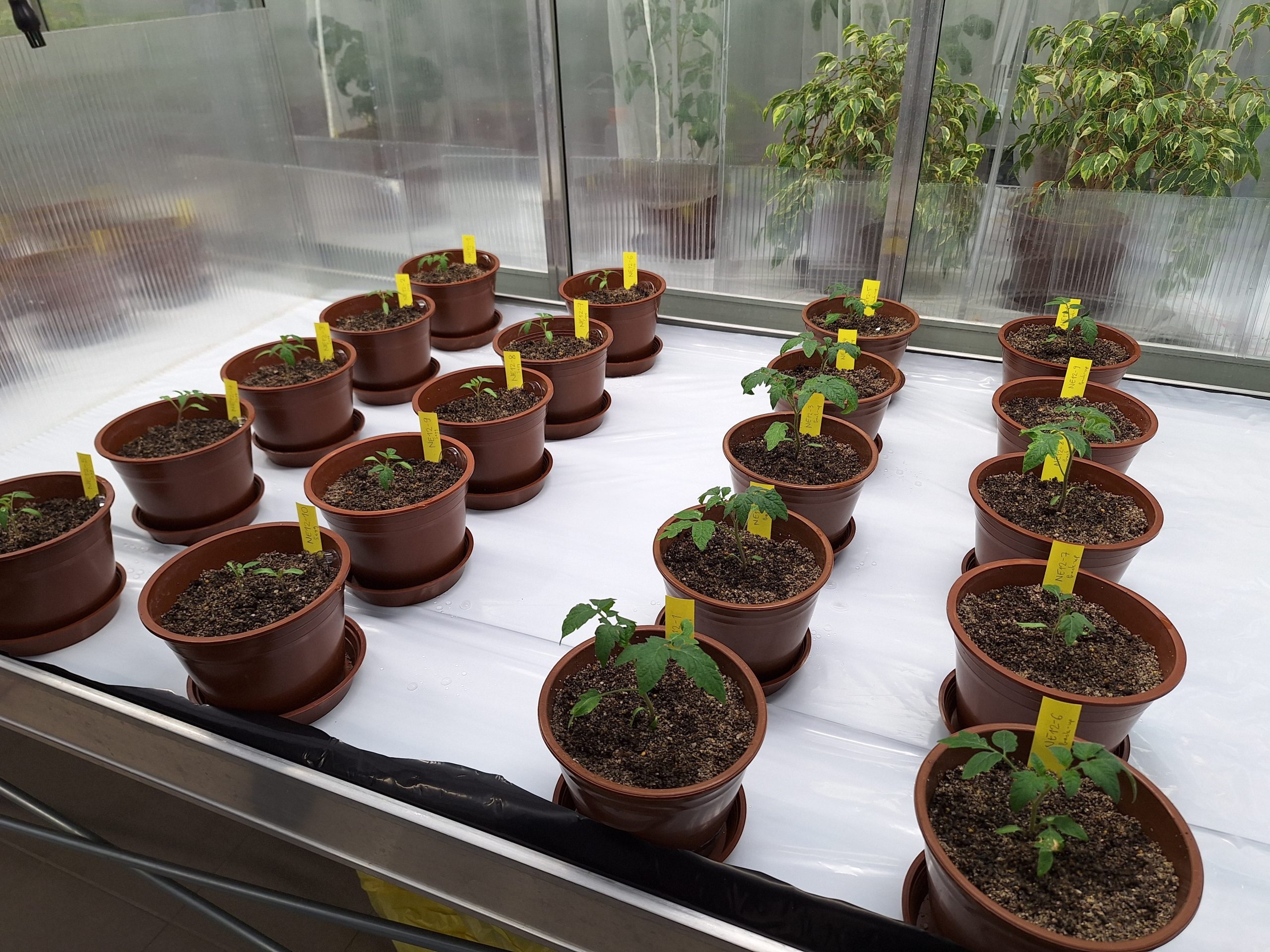
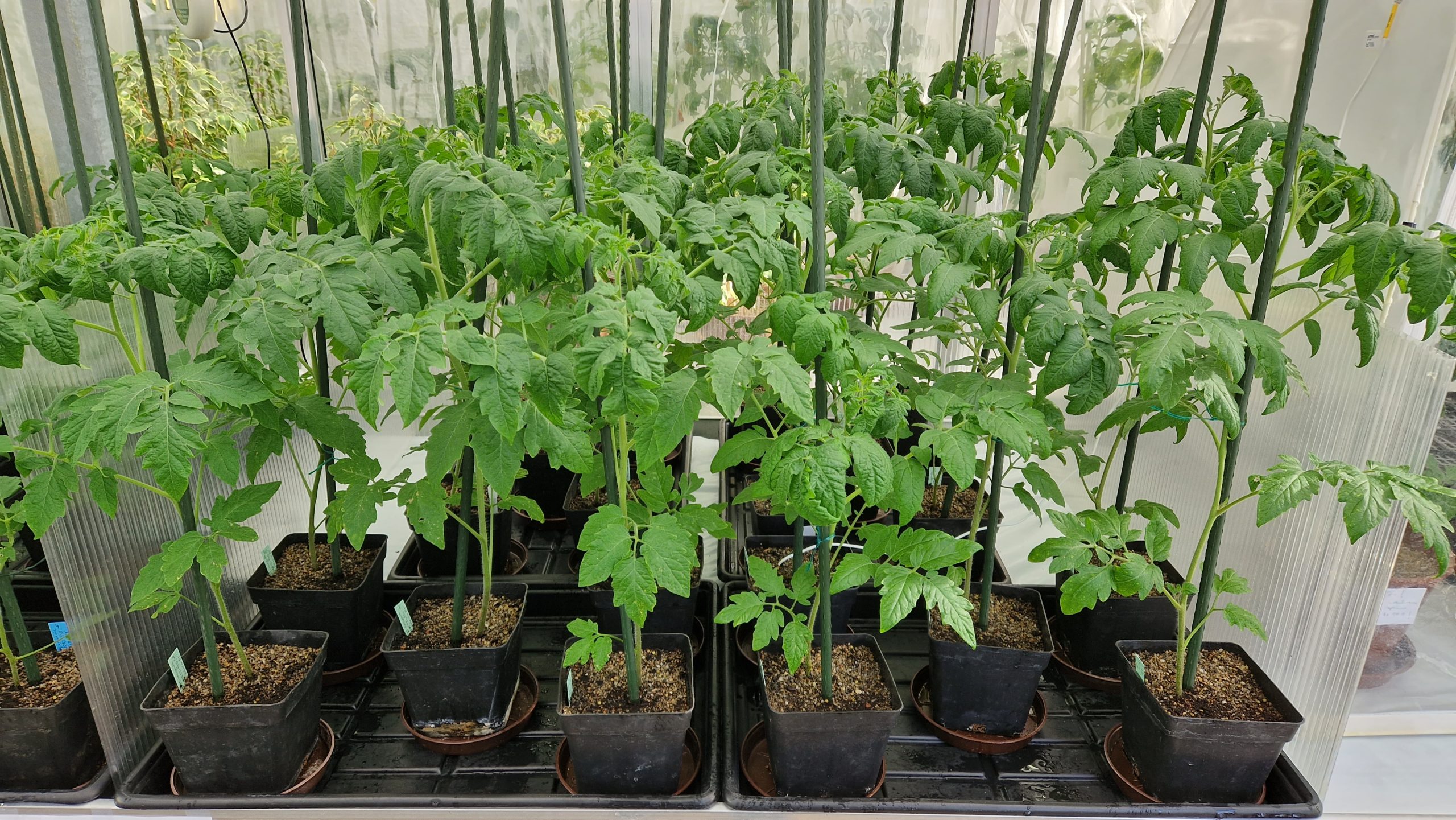
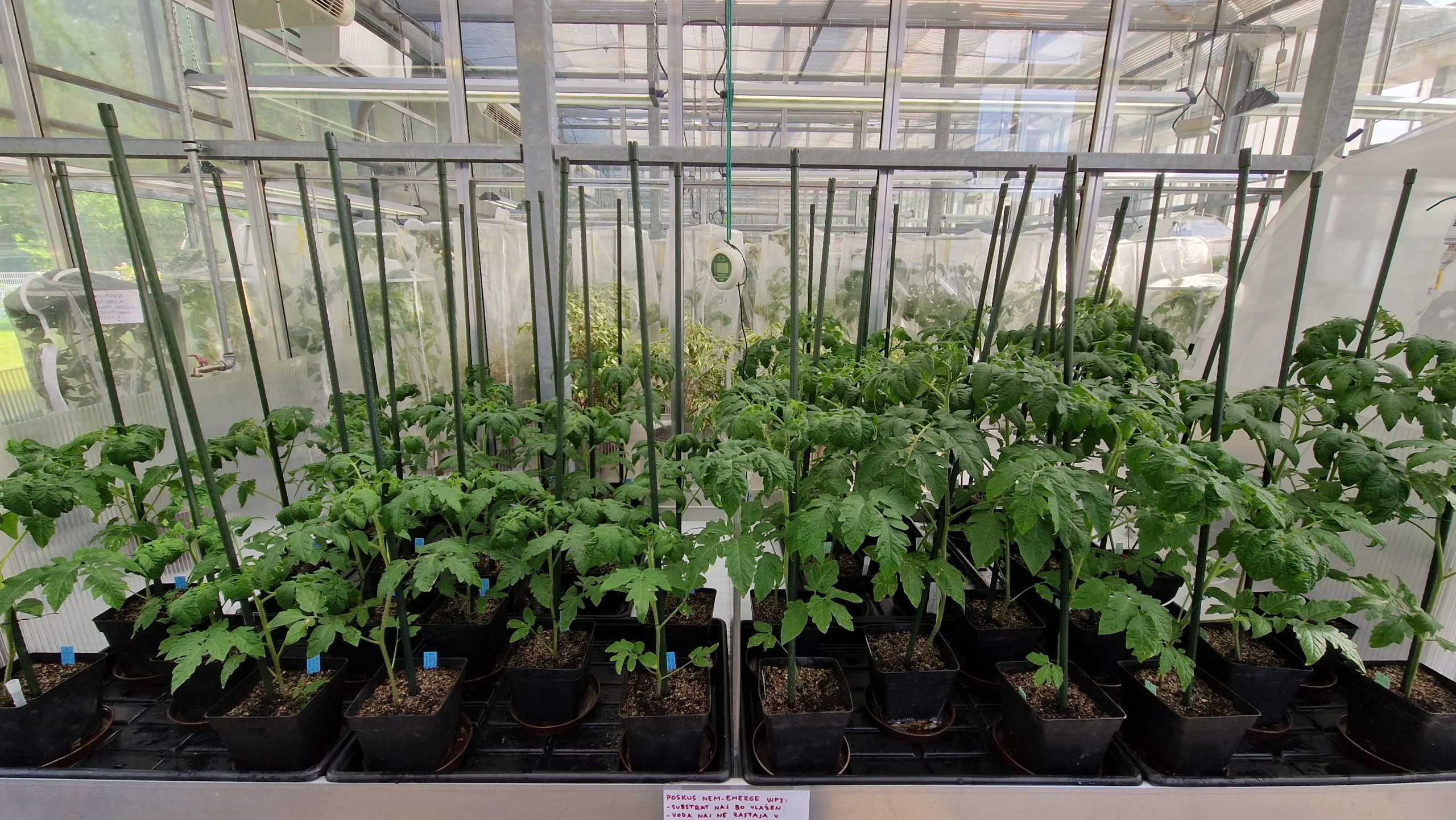
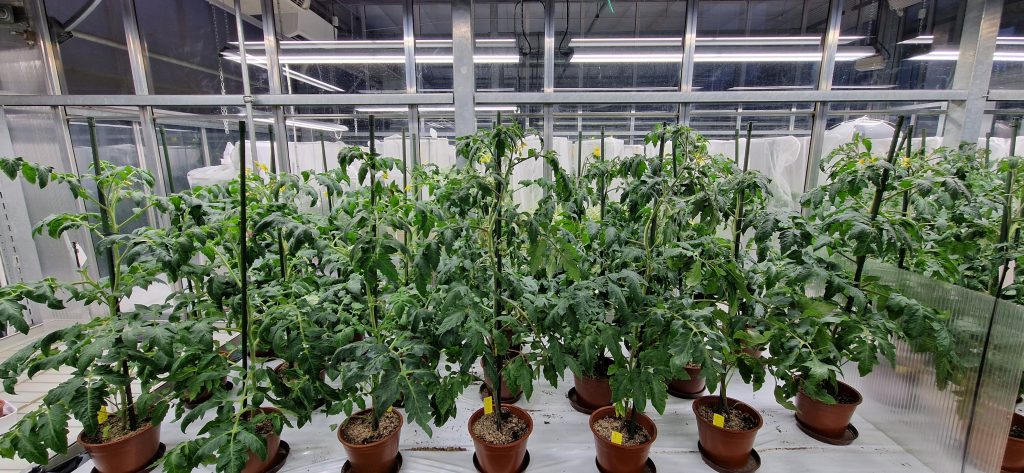
In the experiment, seeds of a susceptible tomato variety, Velasco, and a resistant variety, Rally, were used. 10 plants of each tomato variety were inoculated with J2 (second-stage juveniles) of each of the selected root-knot nematode populations. The plants were kept in the greenhouse at temperatures around 25 °C for 6 weeks until the nematodes had completed their life cycle. At the end of the experiment, the plants were uprooted, the roots were examined for galls caused by nematodes, and the nematode eggs were counted for each plant. “This allows us to determine whether the host plant is susceptible (developed many eggs/nematodes) or resistant (developed no or very few eggs/nematodes)”, explained researchers.
The results of this experiment will be announced soon. Stay tuned!