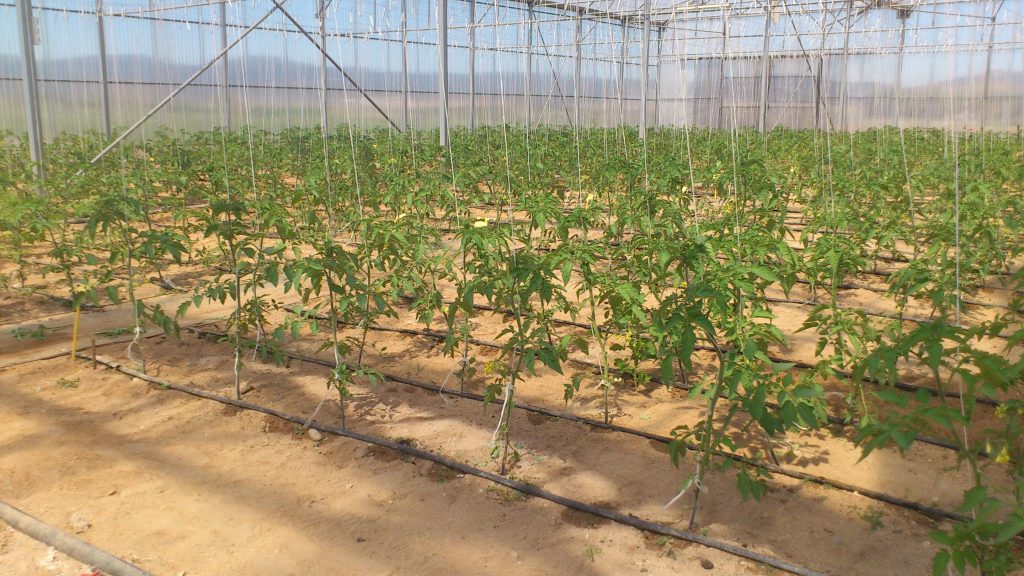
Looking for heat-stable resistance genes in tomato plants
A group of NEM-EMERGE researchers from Wageningen University is working to find out
novel tomato plants carrying heat-stable resistance to root-knot nematodes, which would help
overcome the threat tomato producers are currently facing in this regard. The work carried
out so far has led to taking some steps forward in this search.
Since many nematicides have been prohibited for environmental and human-health reasons,
the current most extended, effective and economically viable genetic resistance to root-knot
nematodes (different species of the Meloidogyne genus) is based on tomato plants carrying
natural resistance to them. This resistance is conferred on plants by specific genes encoding a
protein that activates the plant’s immune response in the presence of harmful nematodes.
However, this protein is temperature-sensitive and becomes inactive at high ambient temperatures (above 28ºC), making heat waves in southern Europe a serious risk to its
effectiveness.
The researchers have been working to identify molecular signatures linked to the resistance
gene’s temperature sensitivity. A first literature review revealed that information about
temperature sensitivity of the already-known resistance genes is very limited. As often in nature,
this phenomenon is likely the result of a complex combination of factors. Knowledge on the
cause of heat sensitivity of resistances is essential for the development of strategies to lift it and
facilitate durable and sustainable agriculture in times of climate change.
Researchers’ approach was based on the analysis of a series of resistance genes to identify
regions and motifs that may be linked to temperature sensitivity. Comparisons were done
between temperature-sensitive and insensitive gene variants, examining specific genome
sequences, comparing the 3D structural models, etc. Their findings highlighted both differences
and similarities across variants, opening new directions for future research.