NEM-EMERGE contributes to developing a reliable method of diagnostics for the tropical root-knot nematode, Meloidogyne luci from Africa
Within the main objectives of WP1 of the NEM-EMERGE project, developing diagnostic molecular kits is the core, among others. Experience in molecular identification of tropical root-knot nematodes (RKN) is not easy, as often mixing of populations is a continuous process and sharing a common genetic region is inevitable. Hence, having a clear differential method of diagnostics between species of tropical RKN becomes a puzzle.
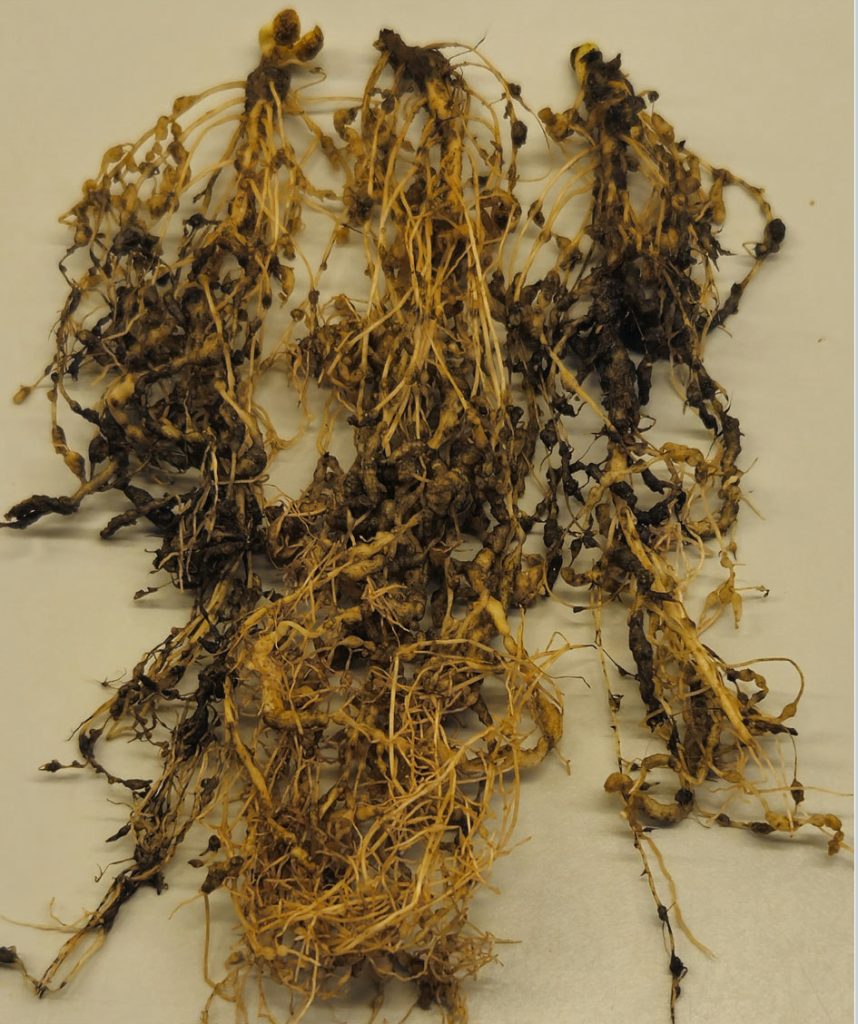
Often, molecular diagnostics supplemented with the morphological assessment gives a solid answer to the identification of tropical RKN. Following the same approach, a multidisciplinary group of researchers, including NEM-EMERGE partners, has recently published an article in Nematology where they described the method developed for the identification of Meloidogyne luci affecting chickpea in Ethiopia using an integrative approach of both molecular and morphological techniques.
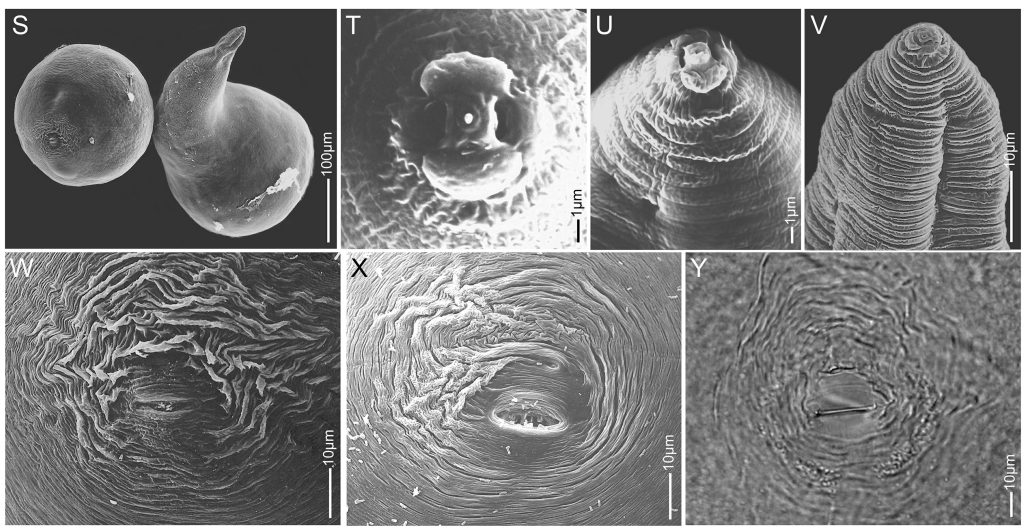
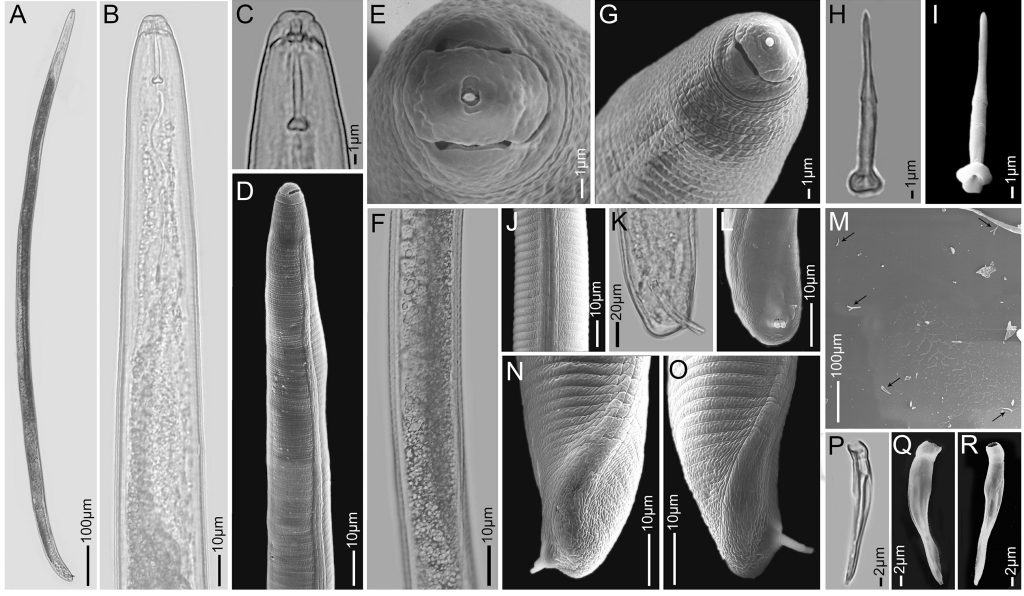
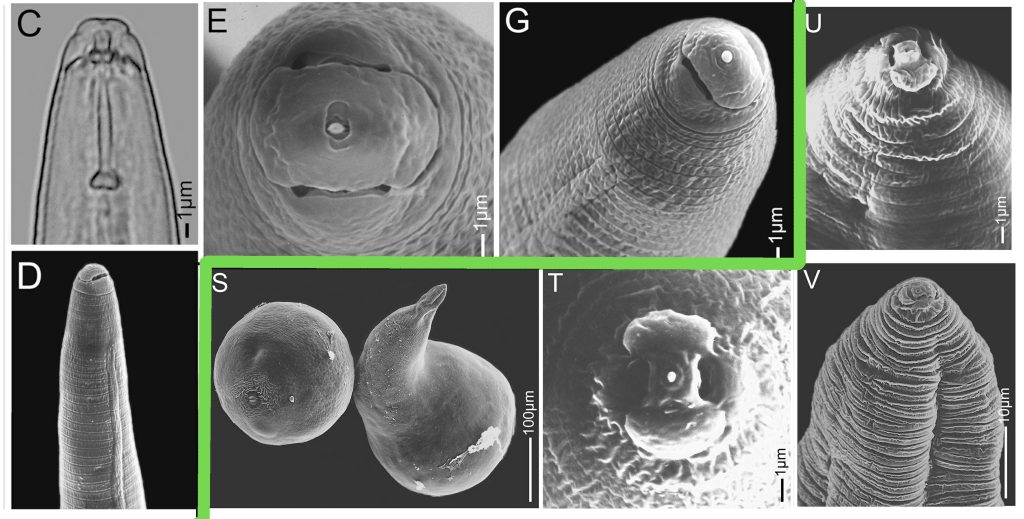
In this paper, the researchers presented the full mitochondrial genome sequencing of M. luci that provides a clear separation of Meloidogyne luci from other tropical RKN species. The molecular work was supported by in-depth additional advanced techniques involving morphological analysis of key parts of Meloidogyne luci, such as the male spicules.
The joint effort among the researchers and the additional molecular techniques developed within the NEM-EMERGE project has led to a reliable diagnostic tool at hand for M. luci from tropical Africa and beyond. This can also be taken as the first step for exploring further the spatial distribution of M. luci from south to North, which could give further clues on its adaptation to multiple climatic scenarios.
The massive morphological work and pot-bioassay was part of the PhD of the first author, who benefited from the NEM-EMERGE project in supporting the mitochondrial genome sequencing.