The deletion of 1% of the genome in Meloidogyne incognita may explain their virulence
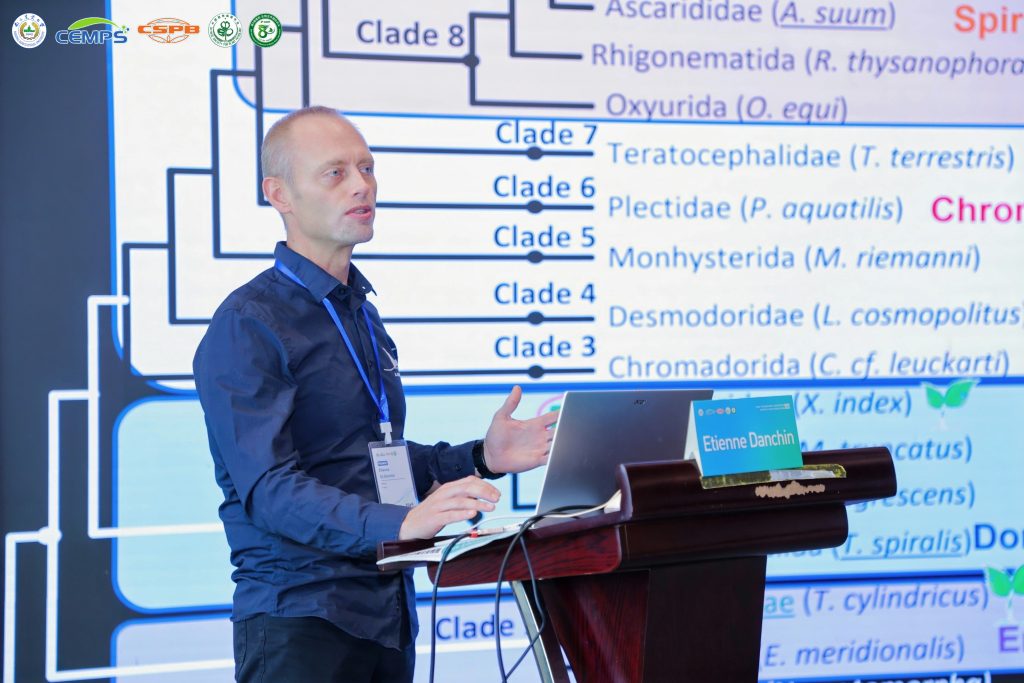
Etienne Danchin, a NEM-EMERGE partner from INRAE, has recently presented their latest results they have achieved regarding virulence acquisition of the root-knot nematode Meloidogyne incognita in the 8th International Conference on Biotic Plant Interactions in Nanjing, China, held on 18-22 October 2026. The session in which he participated was about new Technologies for plant biotic interaction.
The process by which root-knot nematodes become virulent against tomatoes bearing the Mi-1.2 resistance gene has remained enigmatic for decades. In the study, currently published as a preprint in BioRxiv, they used two pairs of virulent and avirulent lines of M. incognita, obtained via experimental evolution assays in the lab, to comprehensively investigate the transcriptomic and genomic changes associated with virulence acquisition. In this analysis, they identified more than 700 genes that are differently expressed in the virulent and avirulent populations.
Genome analyses allowed the identification of two large deletions (of megabase-scale, about 1% of the genome) encompassing 451 downregulated genes in the two virulent lines. The missing sequences resulting from these deletions, containing hundreds of genes, might encode several effectors that may be involved in the recognition and plant defence activation mediated by Mi-1.2 resistance gene of tomatoes. Losing these genes might allow M. incognita lines escape the resistance of tomato plants. Therefore, the researchers suggest that virulence acquisition more likely results from loss of function than from a gain of function.
“The identification of massive losses of genomic material in virulent lines in the present study is a major advance towards better understanding virulence acquisition”, state researchers in the article. According to Etienne, a very important step forward would be “to confirm these big deletions also in natural virulent lines”.
Share on Facebook Share on Twitter Share on Pinterest